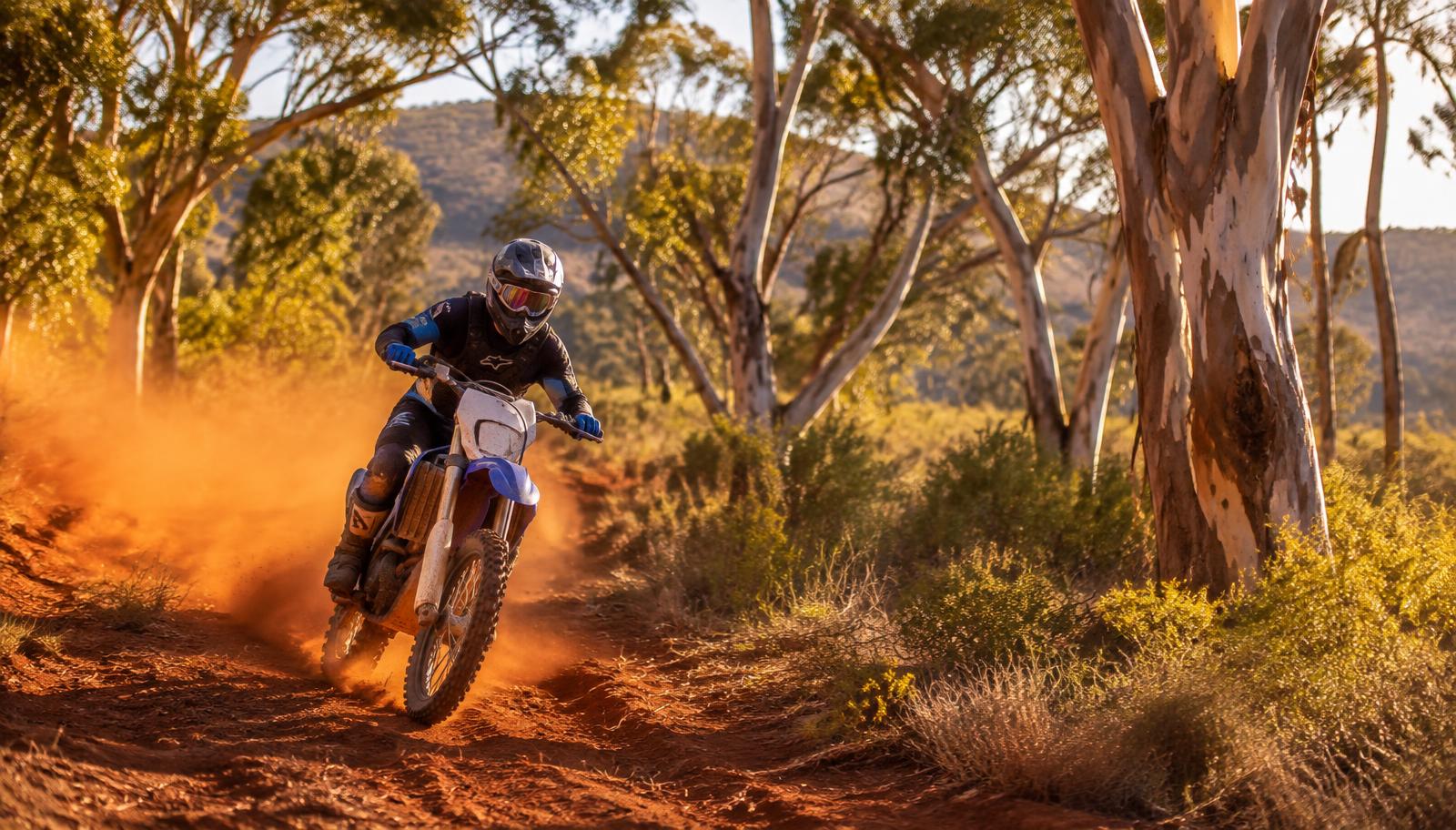
Where Can You Legally Ride a Dirt Bike in Australia?
Club tracks, state forests, private property and the rules explained in plain English, so you can ride without the fines.
"Where can I ride my dirt bike?" is the first question every new rider asks — usually about ten minutes after the bike arrives and about ten minutes before a neighbour asks a question of their own. The short answer in Australia: a lot fewer places than you'd hope, but more than enough if you know where to look.
Here's the plain-English rundown. Rules differ between states and change over time, so always check with the land manager before you go — but this will get you pointed the right way.
1. Club tracks: the easiest legal answer
The simplest, safest and most fun place to ride is a motorcycle club track. Clubs hold the land agreements, insurance and approvals, so you just turn up on a practice or race day, sign on and ride.
What you'll usually need:
- A licence from the sport's governing body — Motorcycling Australia offers annual licences and one-day options for practice and come-and-try days.
- Proper gear — approved helmet, boots, gloves, goggles and body protection.
- A bike that passes a basic check — brakes, throttle and kill switch working.
You don't need road registration to ride at a club track. That's the big advantage over almost everywhere else.
Not sure where your closest club is? Browse the SquadRace club directory or start with NSW clubs. Our beginner's guide to your first club day explains exactly what happens when you get there.
2. State forests: usually yes, but registered
Many state forests allow trail bikes, but there's a catch most beginners miss: the bike and rider generally need to be road legal. That means a registered bike and a current motorcycle licence, the same as riding on a public road.
- NSW: Forestry Corporation of NSW allows registered, licensed riders in many state forests, generally on formed roads and trails. Some forests are closed to bikes, and areas close during logging or fire danger.
- Victoria: State forests are open to registered bikes. Victoria also offers recreational registration for some off-road bikes, which permits riding in state forests but not on regular roads.
- Queensland: Registered bikes may use roads in many state forests, and a handful of areas have managed trail-bike permits.
Always check the land manager's website for closures and maps before you load the ute.
3. National parks: almost always no
National parks generally do not allow off-road riding. Registered bikes can sometimes use the public roads that pass through a park, but leaving the road is off limits and fines apply. If it's a national park, assume no.
4. Private property: yes, with permission (and neighbours)
Riding on private land is legal with the owner's permission. A registered bike isn't usually required. But two things trip people up:
- Noise. Councils and state environment rules can act on noise complaints, and repeated complaints can end your riding there for good.
- Safety and insurance. There are no marshals, no first aid and often no insurance. Ride with a mate, never alone.
Your mate's farm is a great place to learn clutch control. It's a terrible place for a broken collarbone with no phone reception.
5. Public roads, beaches and vacant land: no
This is where most of the fines come from:
- Unregistered bikes can't go on public roads, including dirt roads, the verge and the footpath.
- Beaches, parks and vacant blocks are generally off limits unless an area is specifically signed for riding.
- Police can fine riders, impound bikes, and in some states crush them for repeat offences.
It's not worth losing the bike over a quick blat down the fire trail behind the shops.
The honest recommendation
If you're new, start at a club. You'll ride a properly built track, learn from people who've been doing it for decades, meet other riders, and never worry about whether you're allowed to be there. Clubs need new members and volunteers, and most will happily help a nervous first-timer.
Find a club near you: browse the SquadRace club directory, or check out five NSW club race days worth the drive.
Run a club?
If your club runs race days, SquadRace puts your live schedule and results on every spectator's phone. Your club may already have a free directory page. Find it and claim it, or see how SquadRace works.
Ditch the clipboard for good
See how SquadRace makes race-day results live, accurate and effortless.
Explore SquadRace